Water Tank Manufacturing
Factory Overview
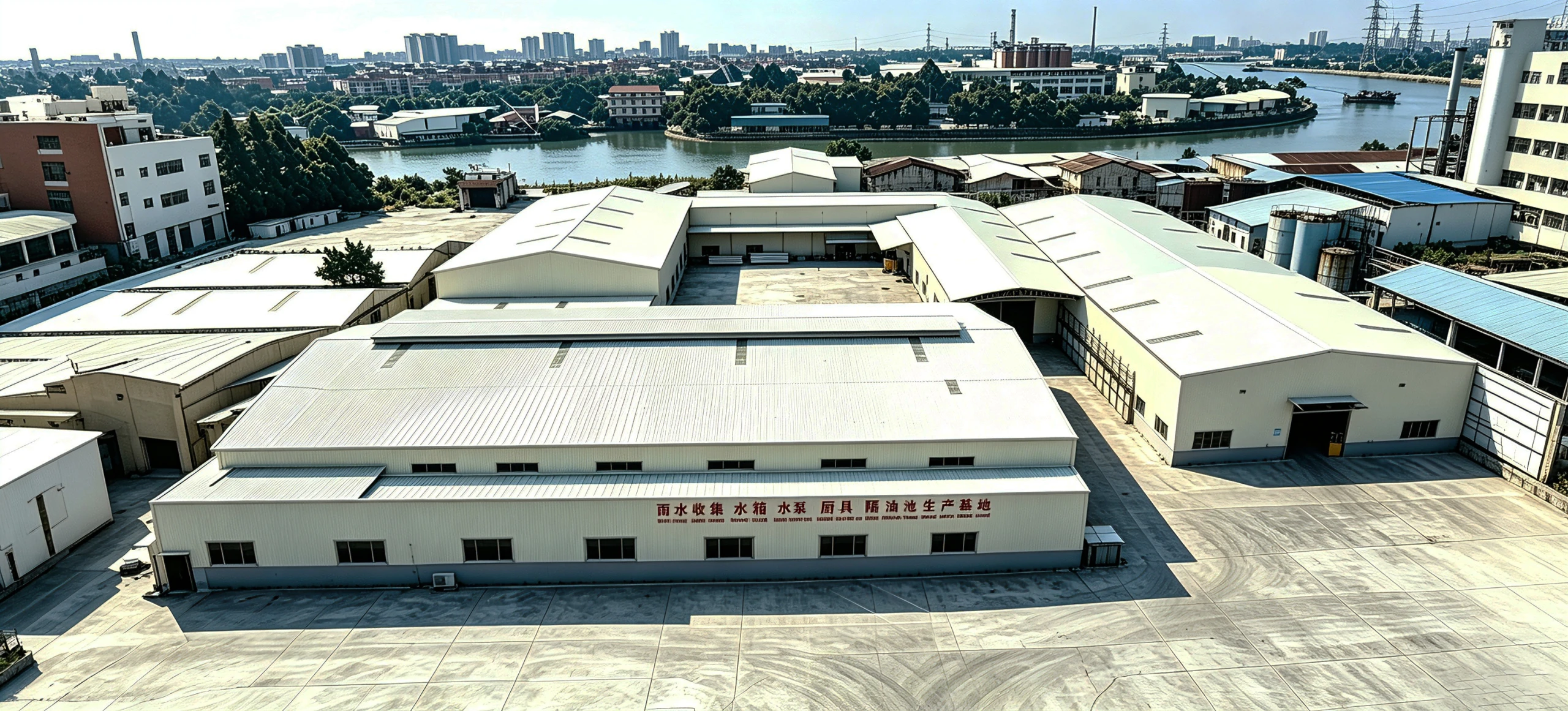
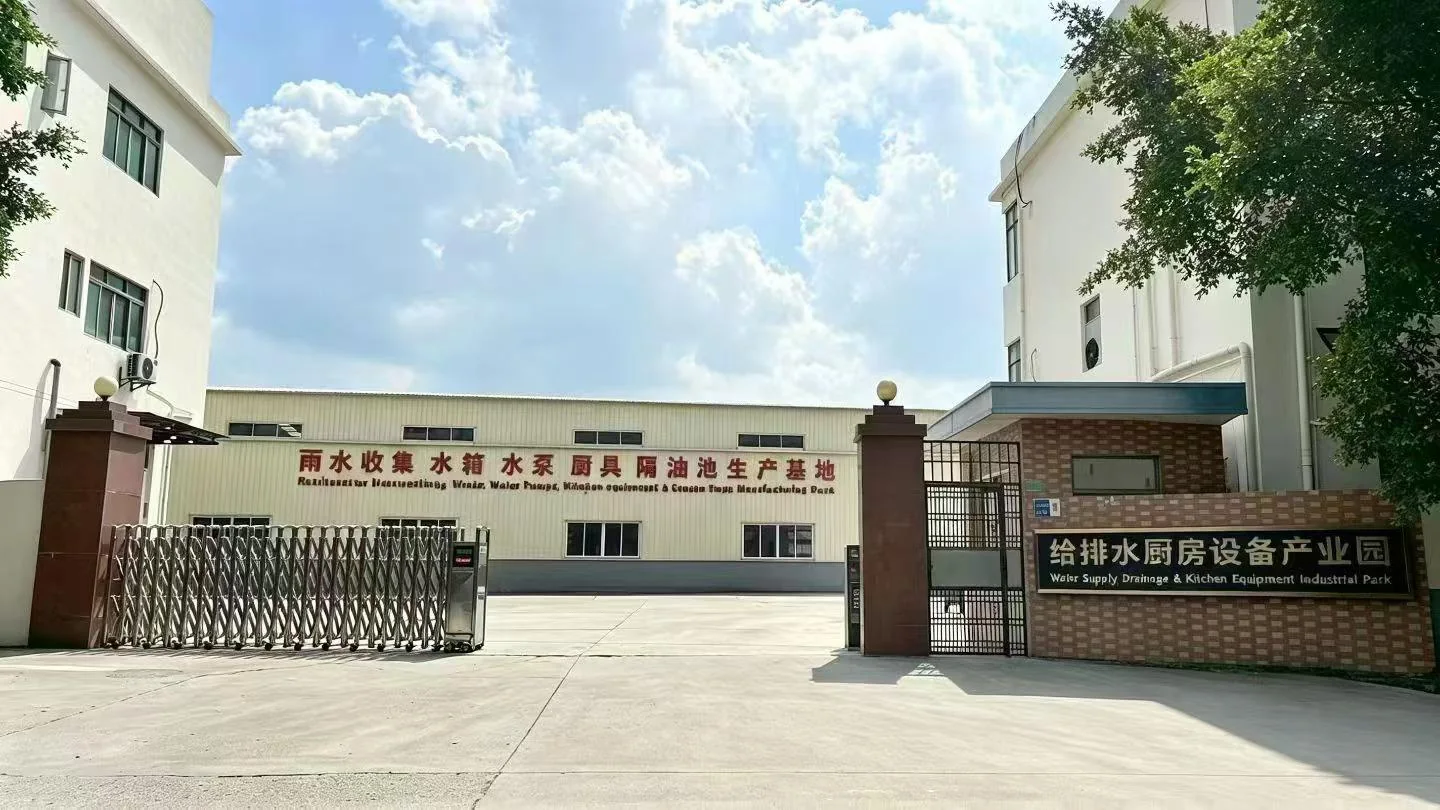
The aerial and entrance photographs show the confirmed HONGLIANG factory site. They provide context for the facility behind our water-tank work without implying additional sites or production capacity.
Manufacturing Process
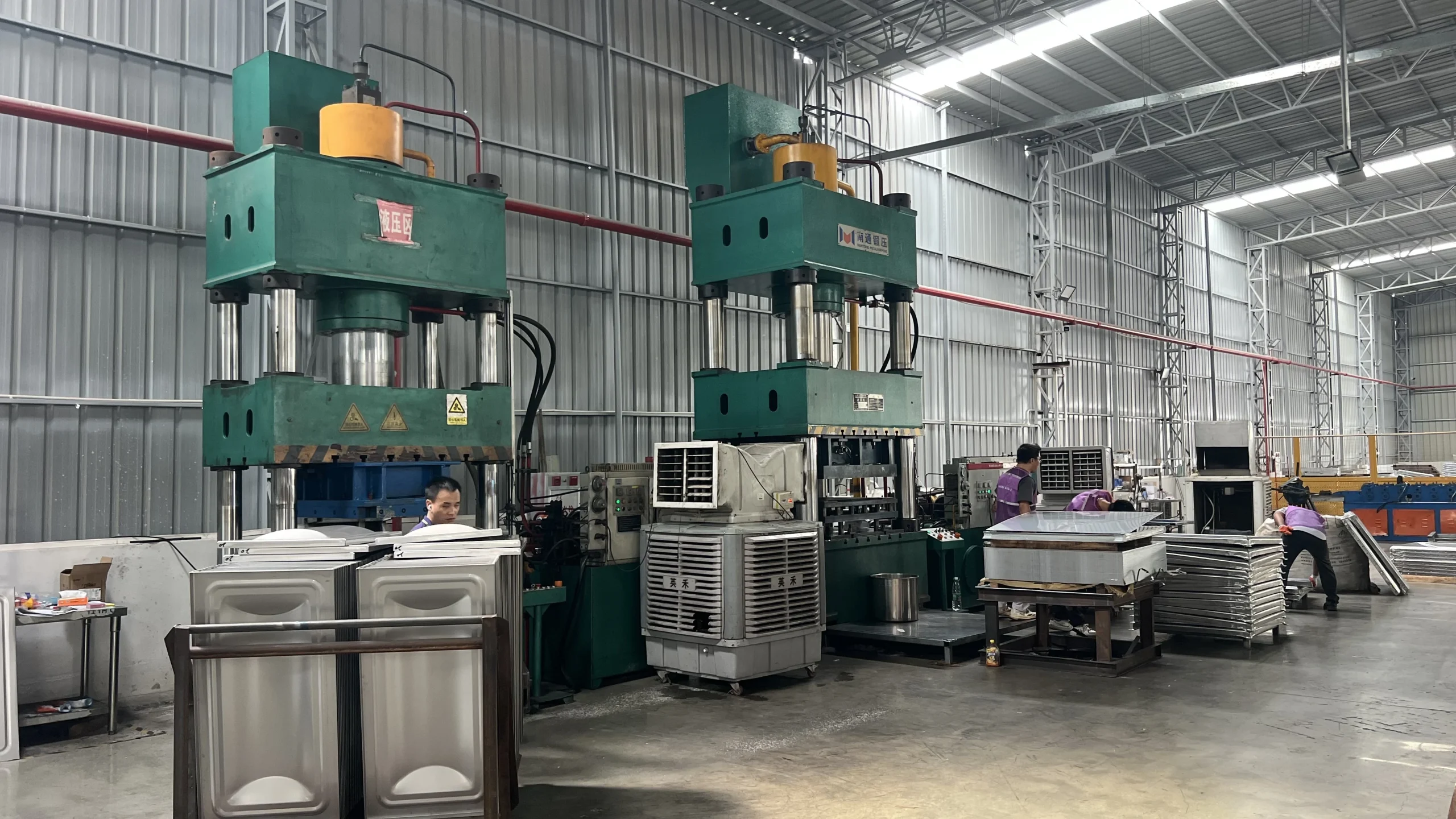
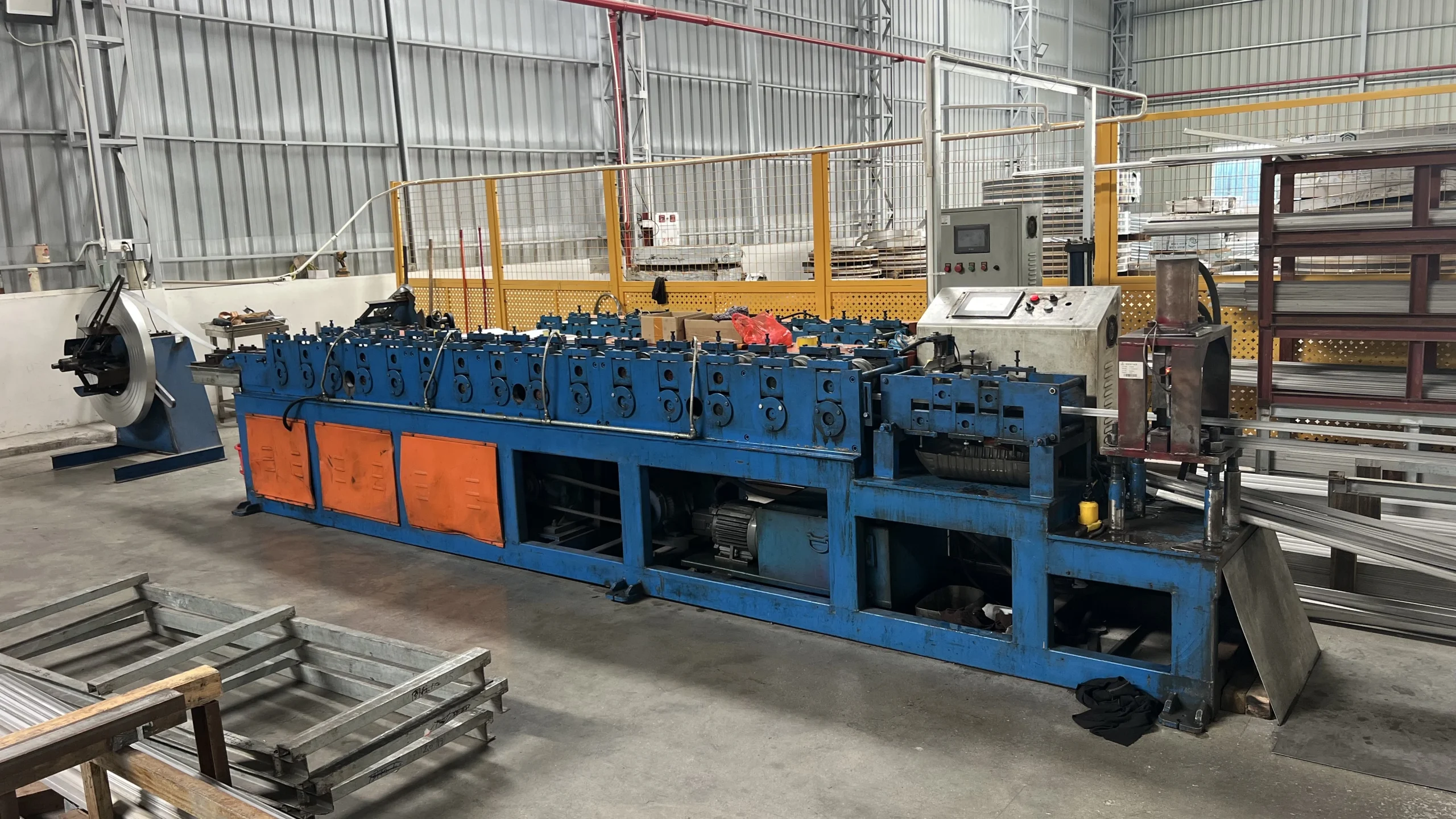
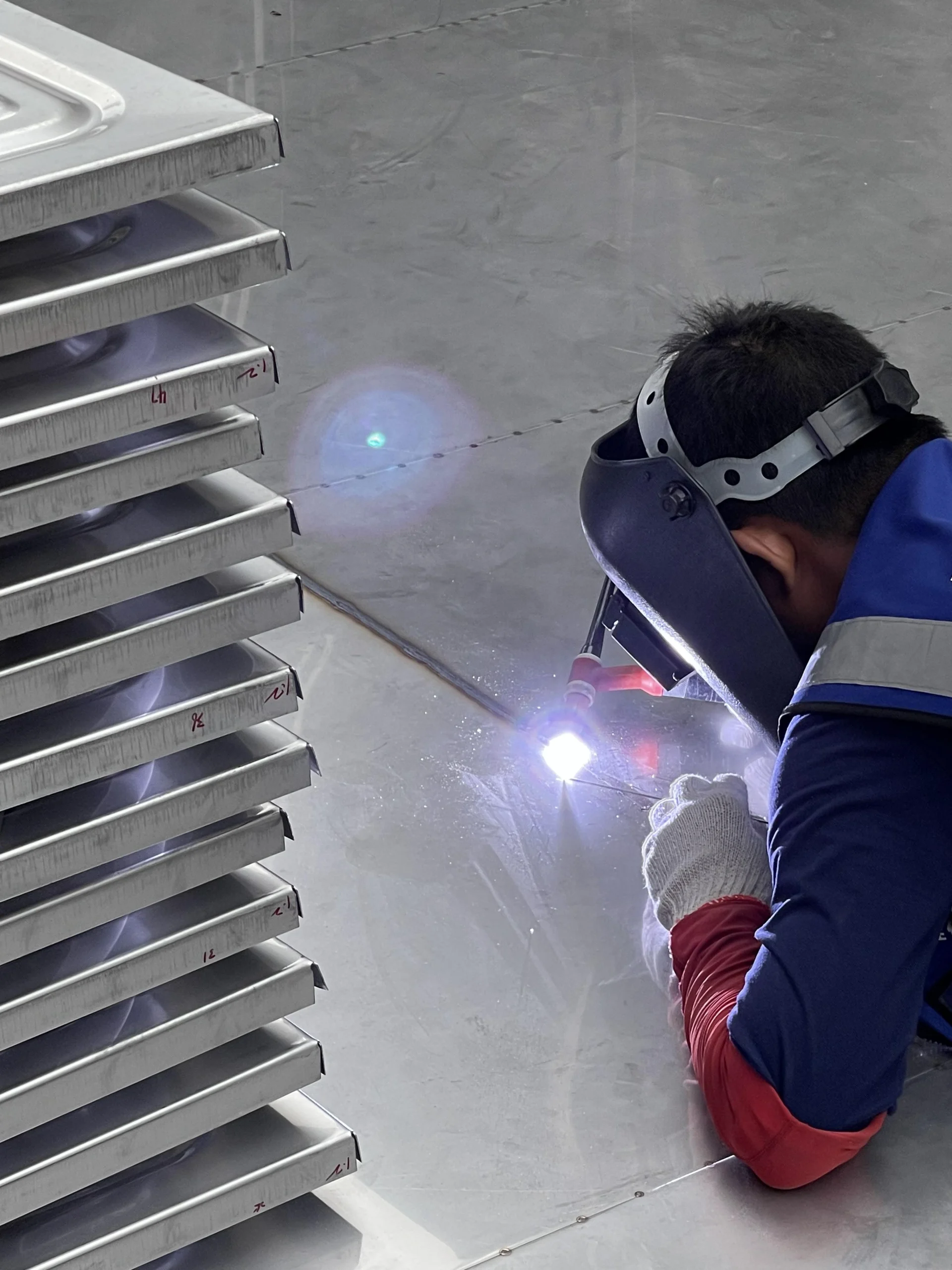
Workshop photographs show formed tank panels beside press equipment, roller equipment with metal profiles, and welding of metal components. They document visible manufacturing steps without defining every product’s process sequence.
Tank Construction & Engineering Review
The workshop photographs above document metal panel forming, roller processing and welding. Use the construction-specific checks below when reviewing a proposed tank and its installation.
| Tank family | What to review |
|---|---|
| Stainless Steel Water Tanks | Pressed stainless steel panels form the enclosure. Review the proposed grade against water chemistry, then check joint access, supports and connection positions. |
| Insulated Water Tanks | The inner tank, insulation and outer skin serve different purposes. Confirm the temperature range and hold time, and check continuity around openings and pipe connections. |
| BDF Underground Water Tanks | For the proposed buried composite-panel assembly, review panel specifications alongside groundwater, cover loads, the empty-tank condition and permanent maintenance access. |
| GRP / FRP Water Tanks | GRP / FRP uses sectional composite panels. Check resin and seal compatibility, base supports and clearance for assembly against the proposed water duty. |
| Ribbed Panel Water Tanks | Use dimensioned elevations to coordinate rib locations, connections and support points. Confirm the material grade and space available for assembly. |
| Lined Water Tanks | The lining provides the water-contact surface. Review substrate condition, preparation access and the proposed details at joints, outlets and other penetrations. |
| Galvanized Steel Water Tanks | For a galvanized steel assembly, review coating compatibility with the stored water and the proposed protection at joints. Leave access for inspection. |
For pumps, pipework and tank connections, see Water Supply System Integration.
Structural Analysis & Engineering Design
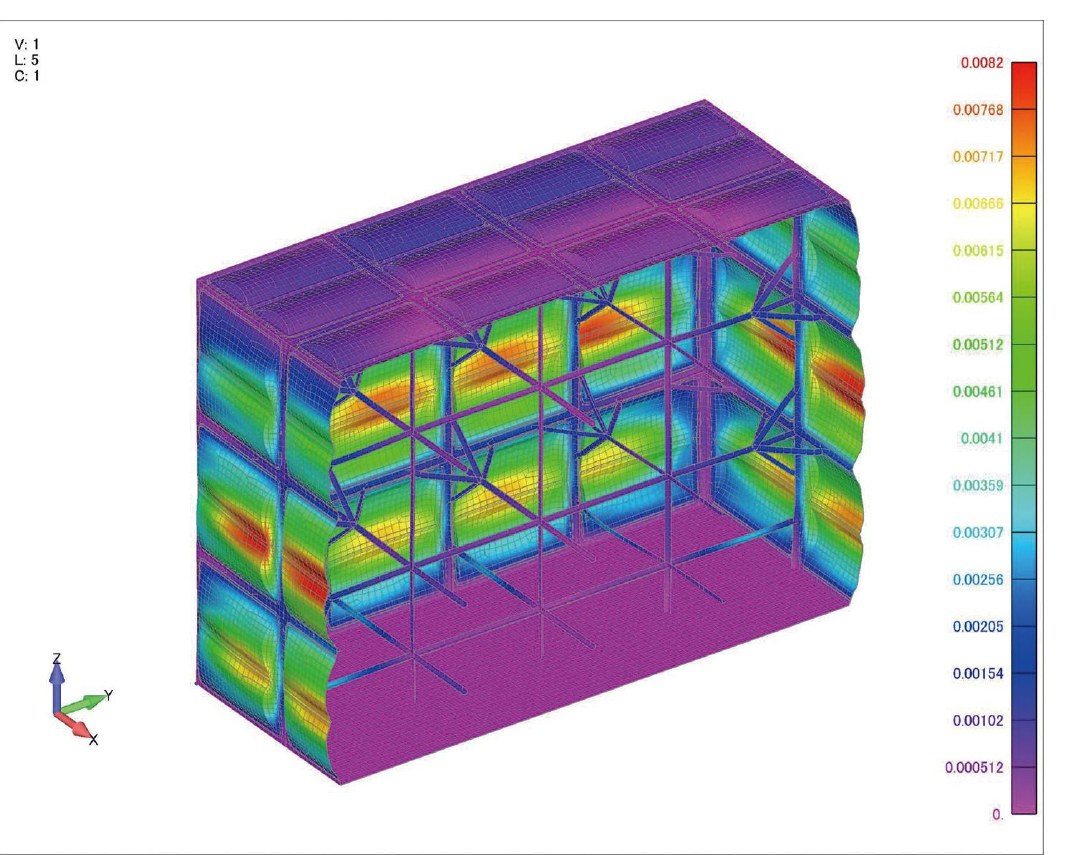
Developed with Japanese experts, HONGLIANG’s force-analysis approach uses numerical models to review selected water-tank panels under defined loads and supports. Each project needs its own design review.
Structural Layout
Compare panel layout, bracing and supports.
Plate Selection
Assess plate thickness and configuration.
Load Response
Review predicted deformation under load.
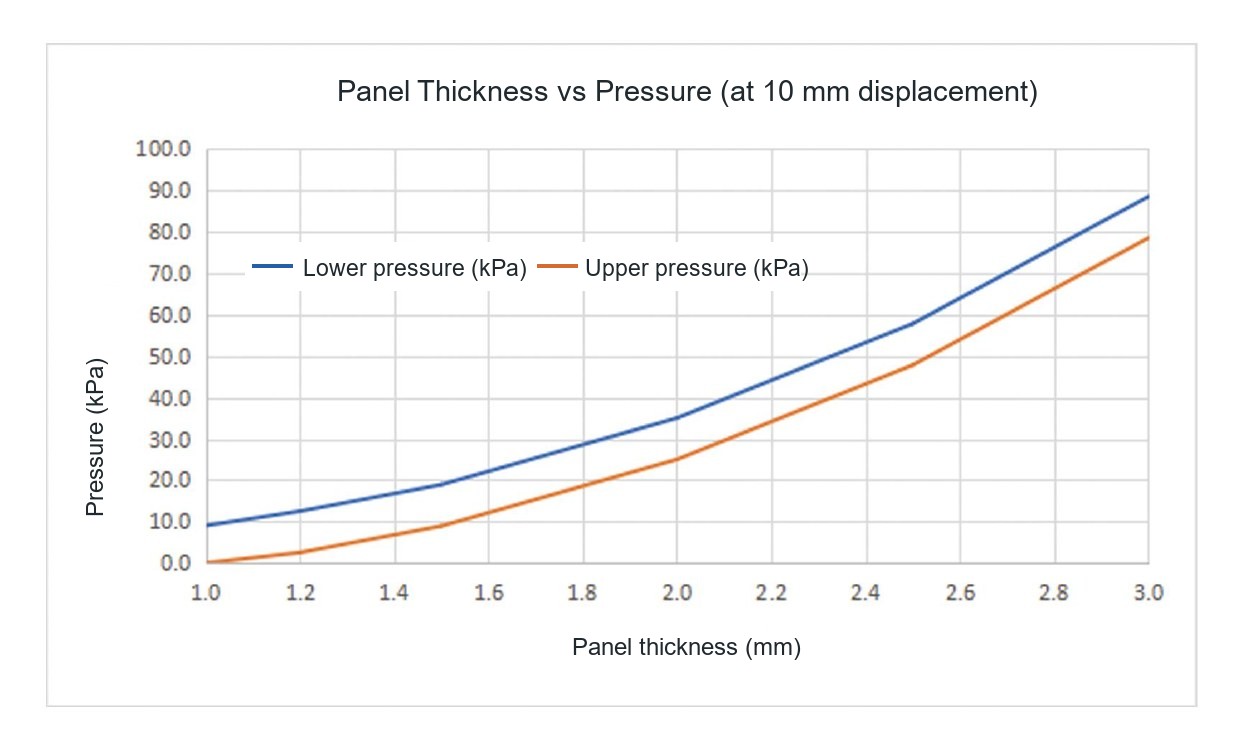
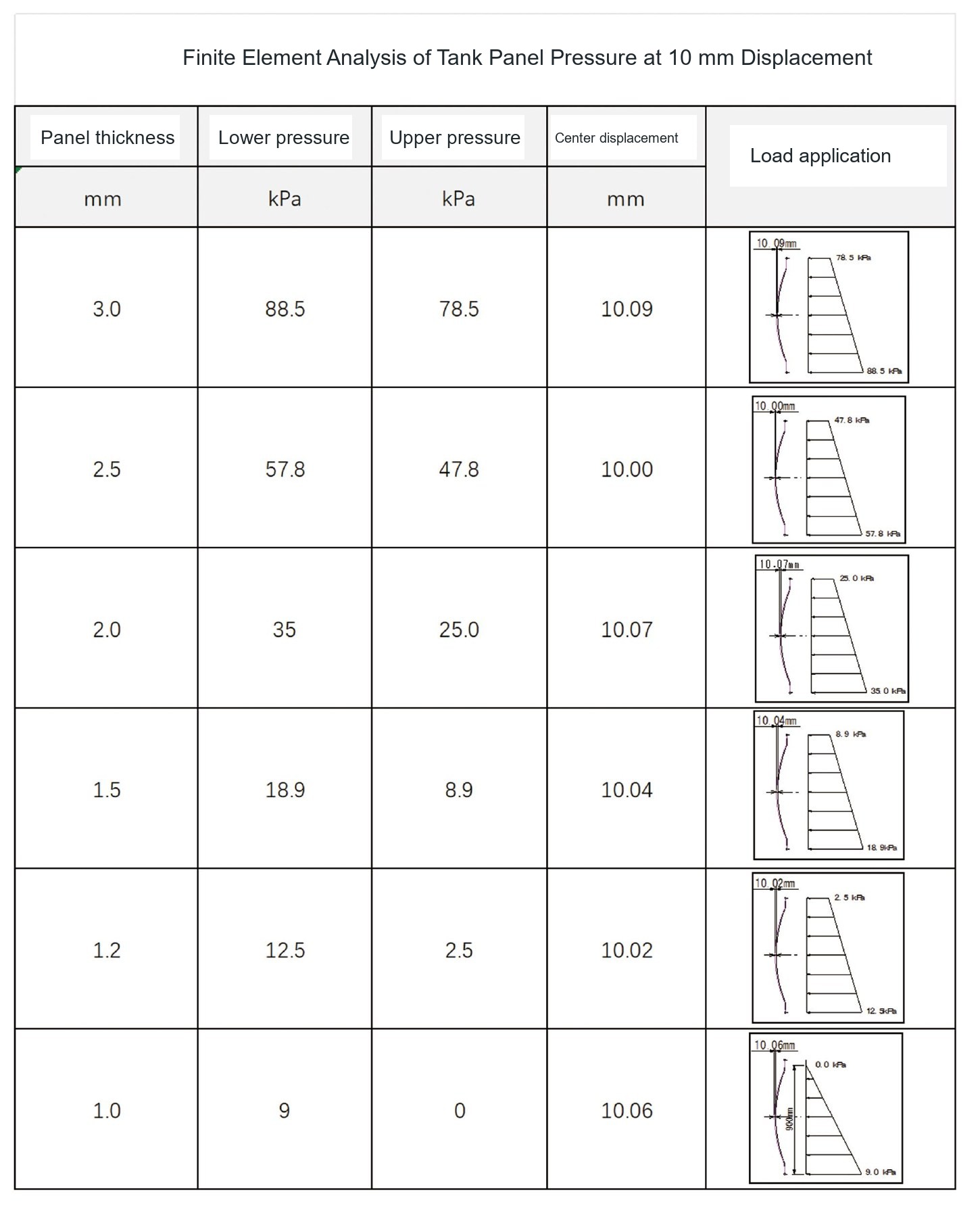
The catalogue compares 1.0–3.0 mm plates near 10 mm centre displacement using water pressure in kPa. A separate fixed-edge 3 mm model at 0.1 MPa predicts about 11 mm displacement.
View four supporting analysis figures and model conditions
The original table and mesh support the panel and tank examples above. The 0–20 s acceleration input in m/s² and response contour are simulated seismic figures; they do not represent a physical seismic test or an approved seismic grade.
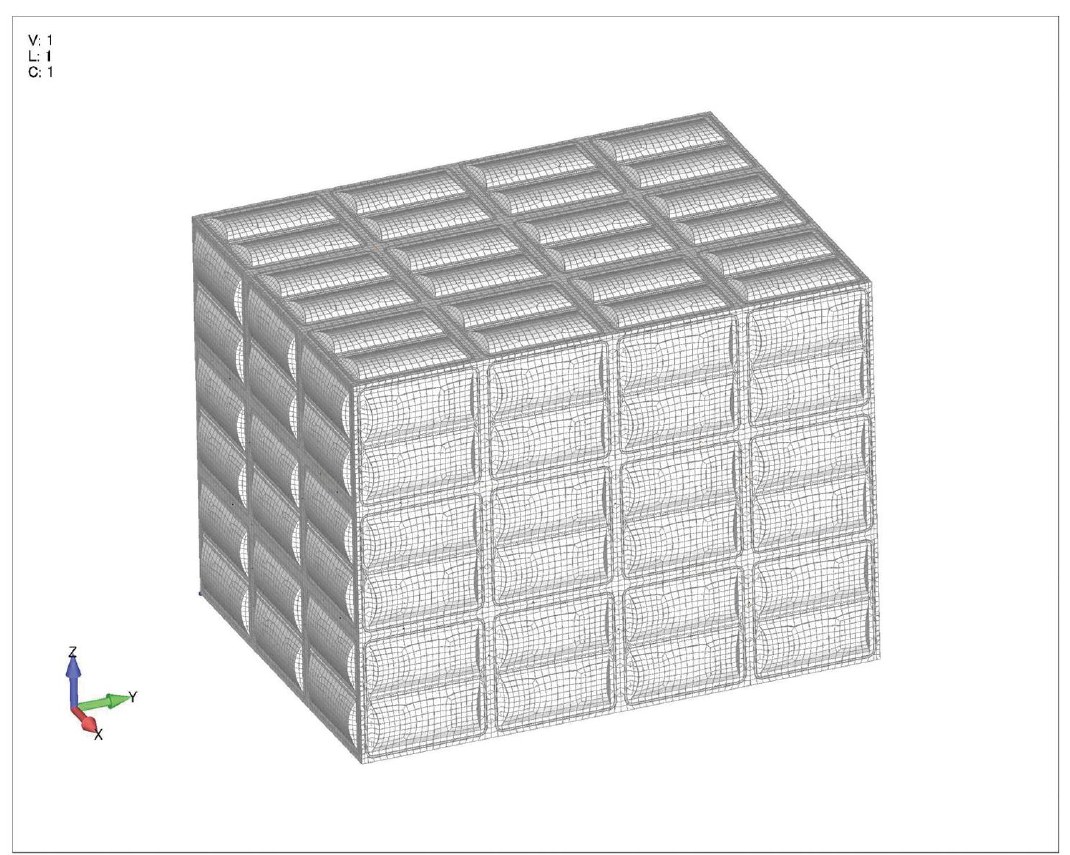
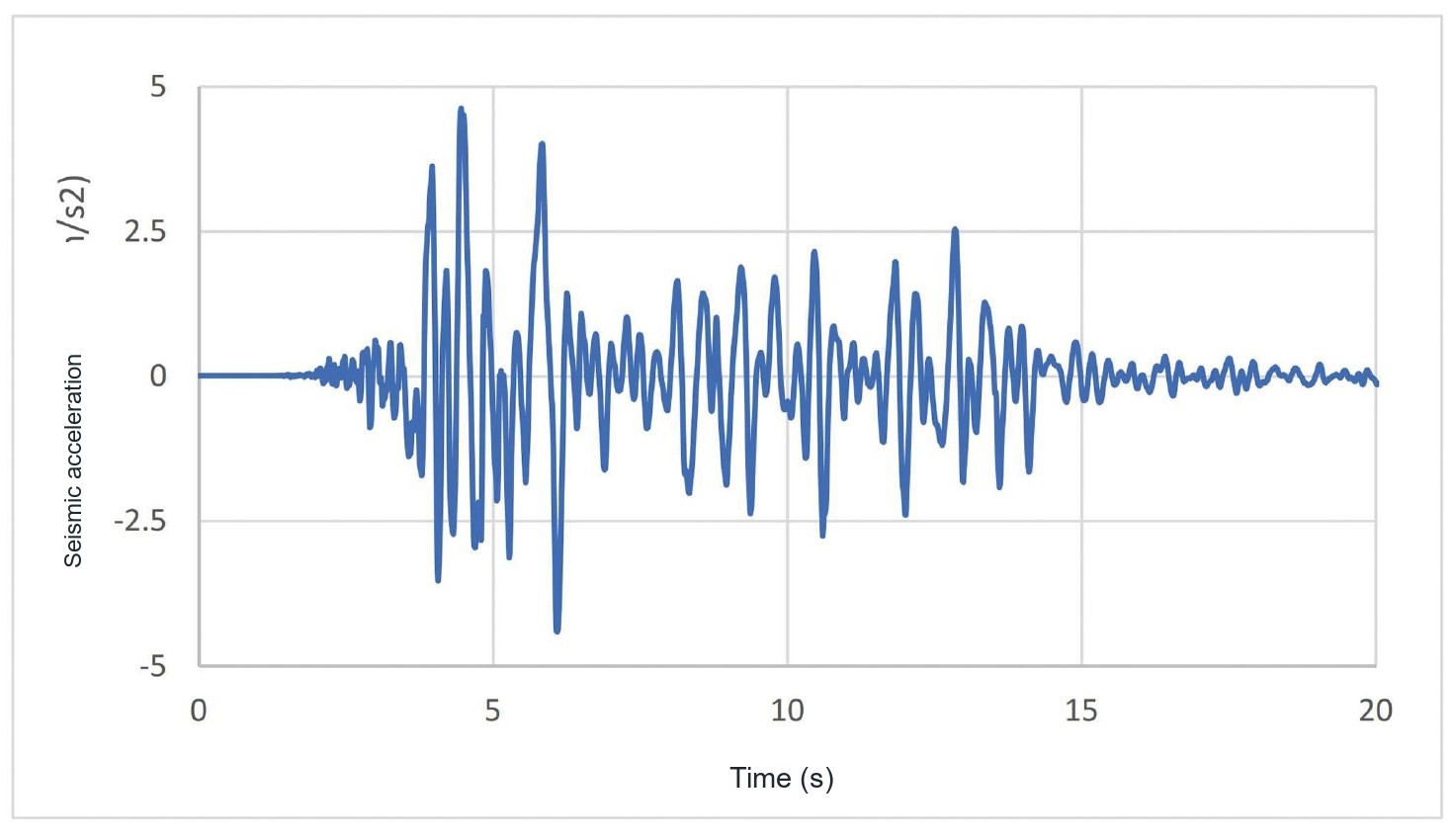
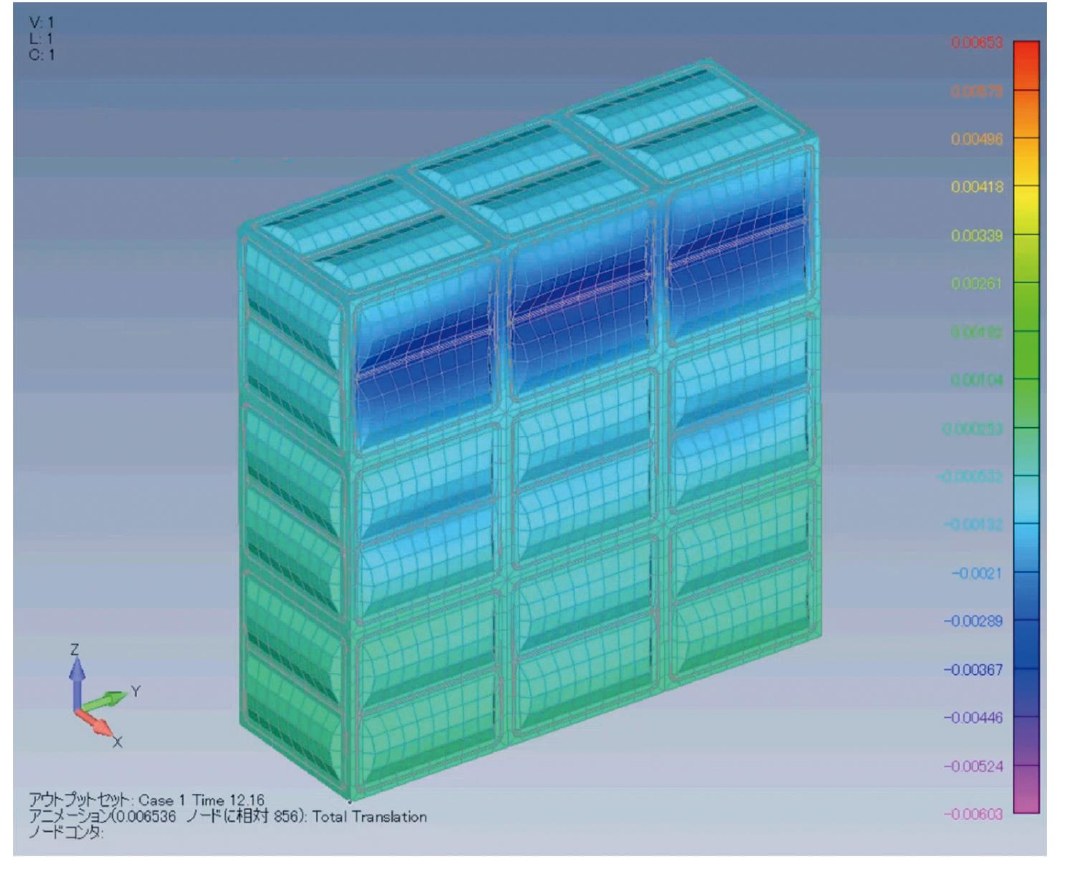
These model results are not physical tests, third-party certification or a general seismic rating. Confirm project geometry, materials, supports and loads. Share project requirements for review.
Quality & Compliance Documents
These dated documents have different holders, scopes and purposes. Current register or patent status has not been independently verified. Management-system certificates are not product approvals; sample results apply only to the submitted sample and report conditions.
Product Certification & Testing
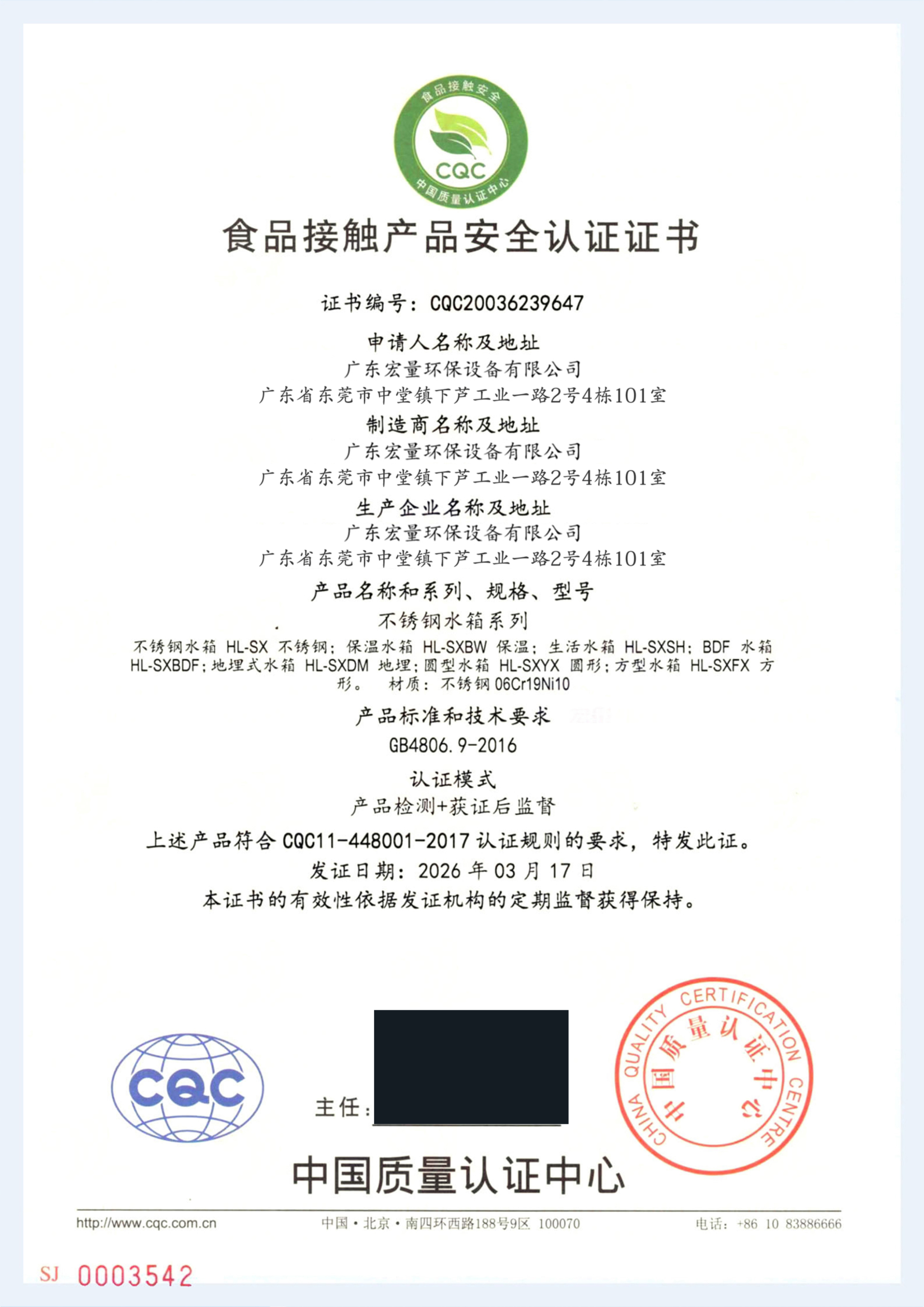
CQC Food-Contact Product Certificate
No. CQC20036239647; issued 17 Mar 2026. The scan lists specified stainless-steel water-tank series under GB 4806.9-2016. Ongoing surveillance and current status unverified; scope is limited to the listed models.
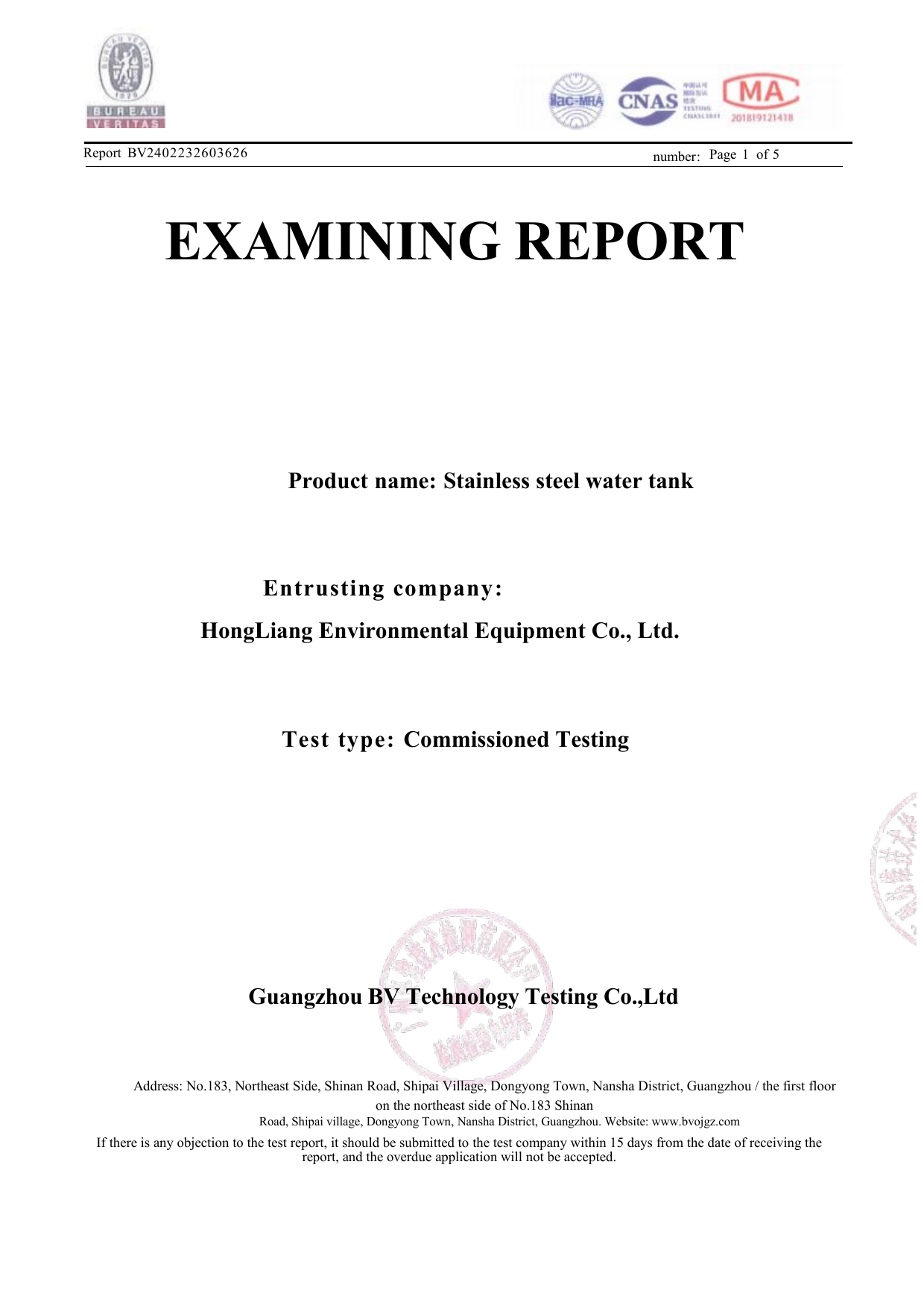
BV Stainless-Steel Sample Test Report
Report BV2402232603626. Sample examined 22 Apr 2024; report completed 30 May 2024. Sensory and stated metal-migration results apply only to the submitted stainless-steel 304 water-tank sample under report conditions. QR masked; full PDF is not posted.
Management System Certificates
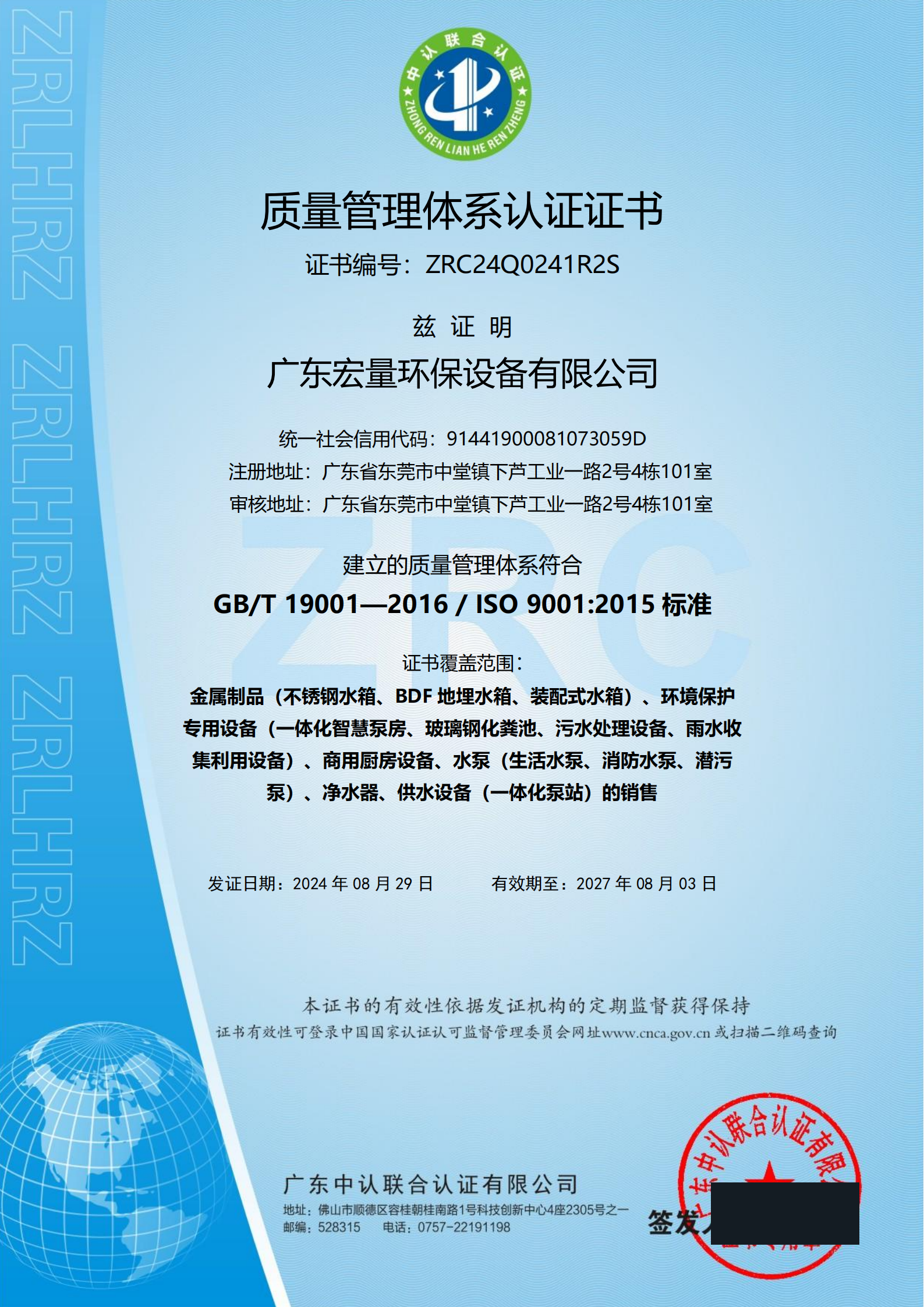
ISO 9001:2015 — Quality Management
No. ZRC24Q0241R2S. Issued 29 Aug 2024; printed expiry 3 Aug 2027. Sales-management scope includes listed metal products and water tanks. Current status unverified.
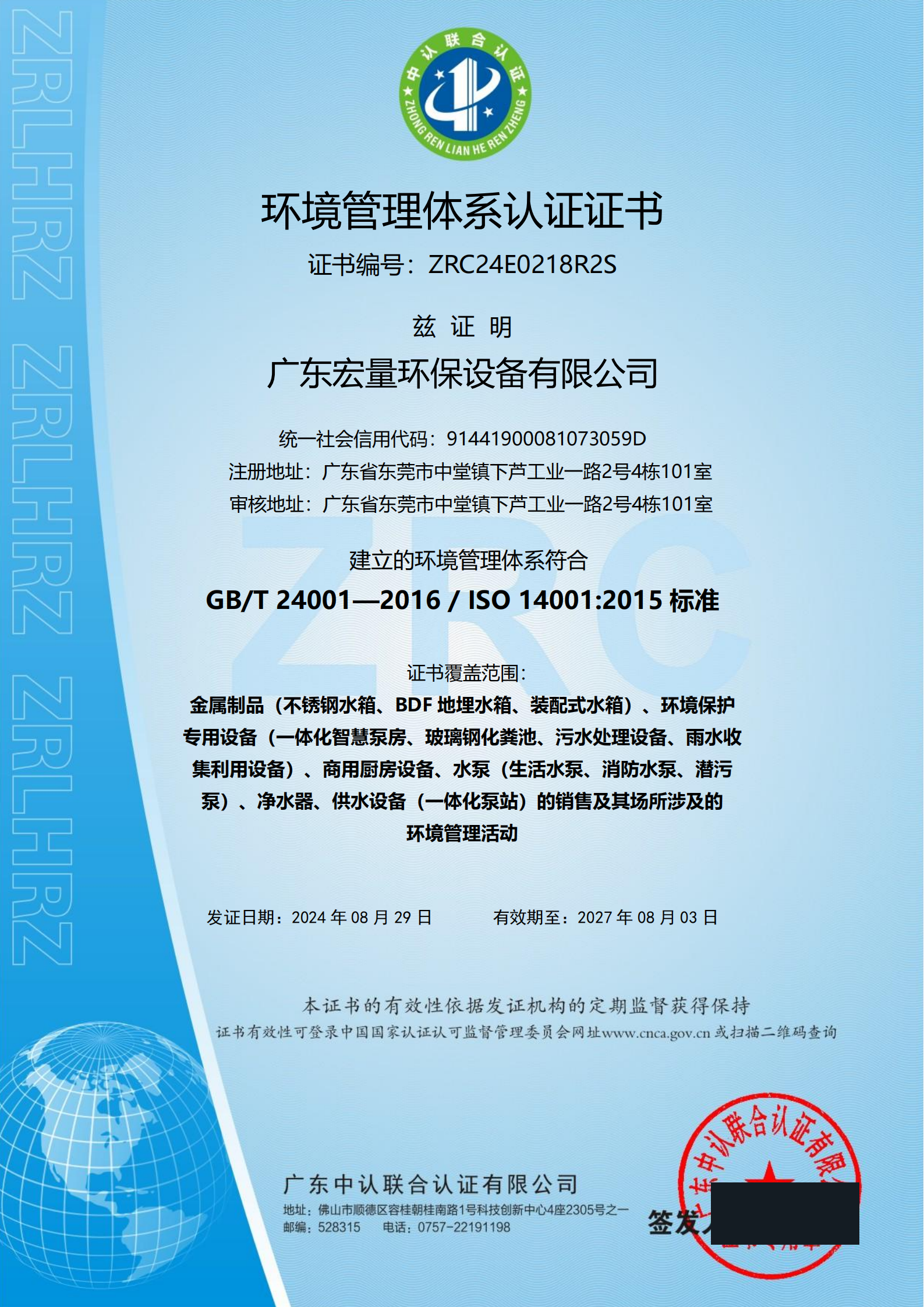
ISO 14001:2015 — Environmental Management
No. ZRC24E0218R2S. Issued 29 Aug 2024; printed expiry 3 Aug 2027. Listed sales-management scope; no tank product approval. Current status unverified.
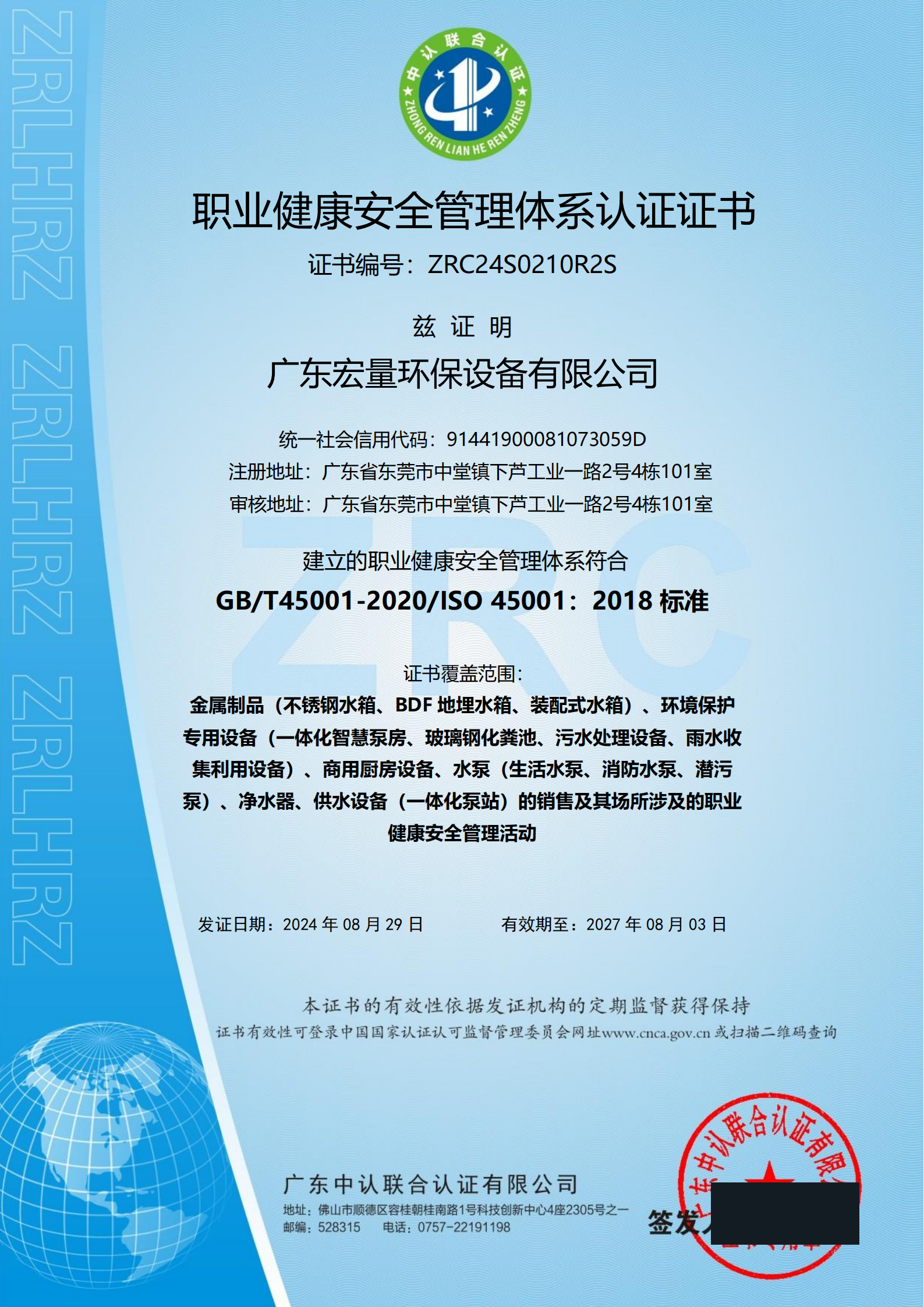
ISO 45001:2018 — Occupational Health & Safety
No. ZRC24S0210R2S. Issued 29 Aug 2024; printed expiry 3 Aug 2027. Listed sales-management scope; no tank product approval. Current status unverified.
Patents & Technical Documents
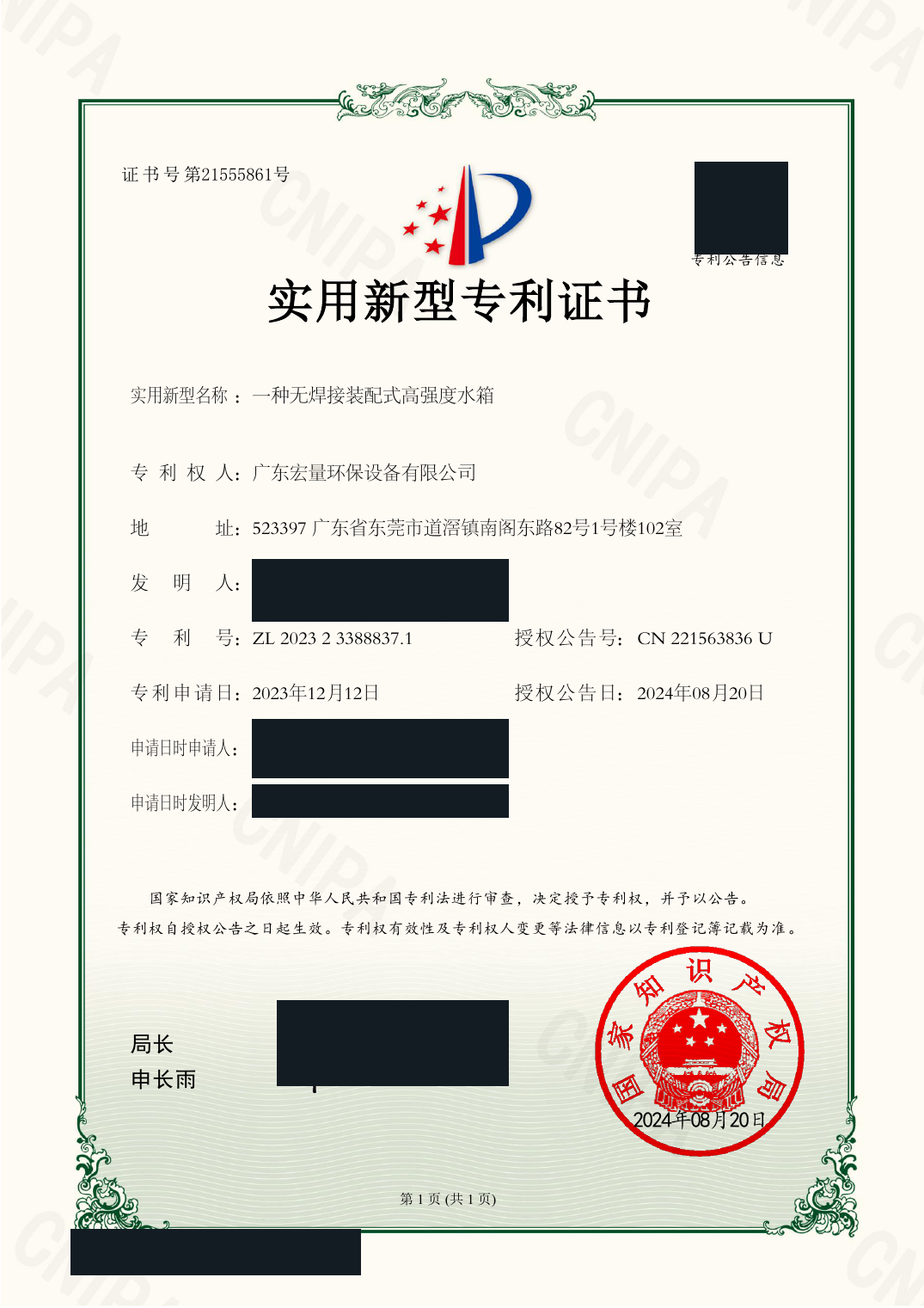
No-Weld Assembled Tank Utility Model
Certificate 21555861; publication CN221563836U, 20 Aug 2024. Names 广东宏量环保设备有限公司. Patent record, not product certification; current legal status unverified.
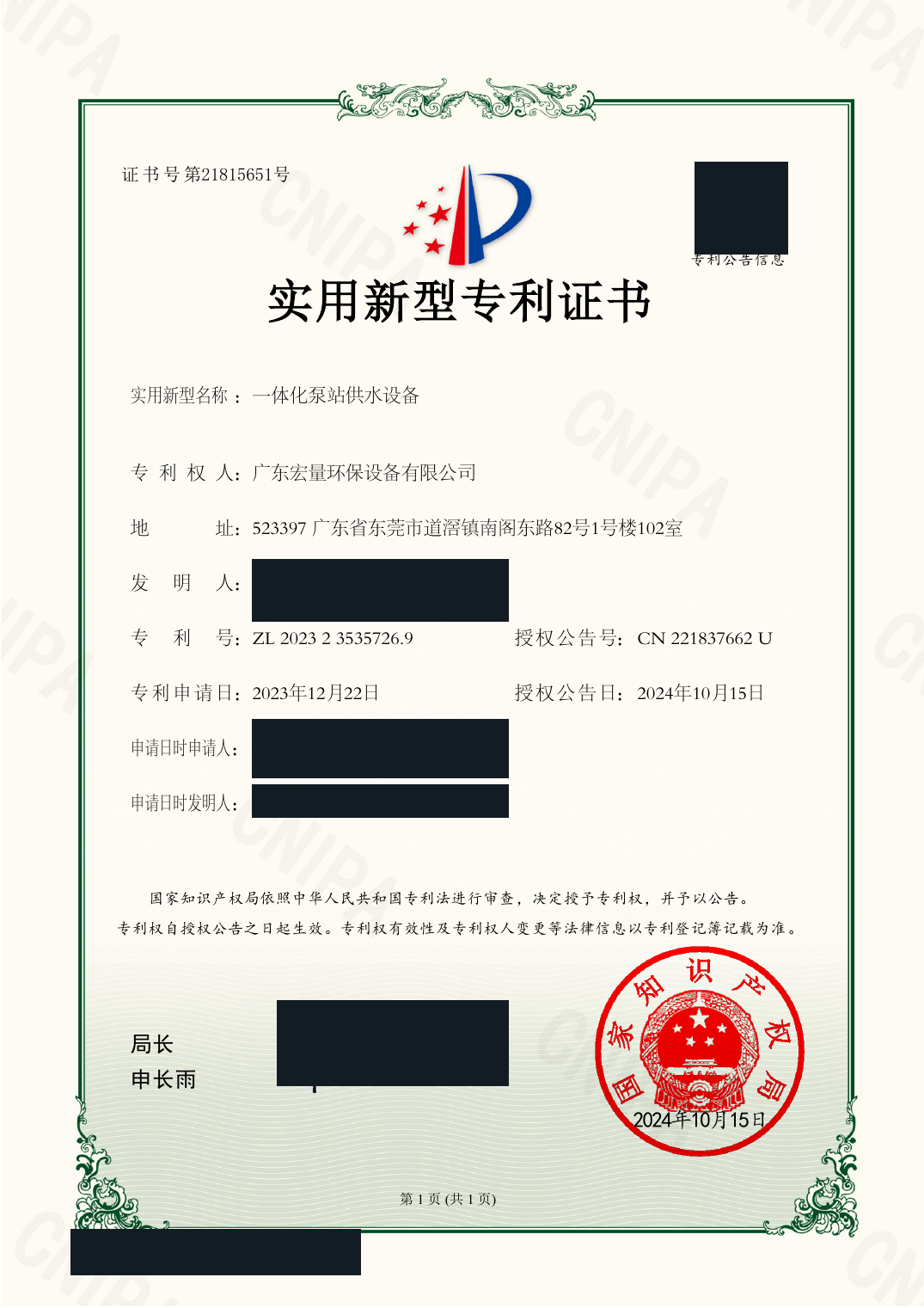
Integrated Pump-Station Supply Equipment Utility Model
Certificate 21815651; publication CN221837662U, 15 Oct 2024. Names 广东宏量环保设备有限公司. Supply-equipment patent record; current legal status unverified.
Company Registration
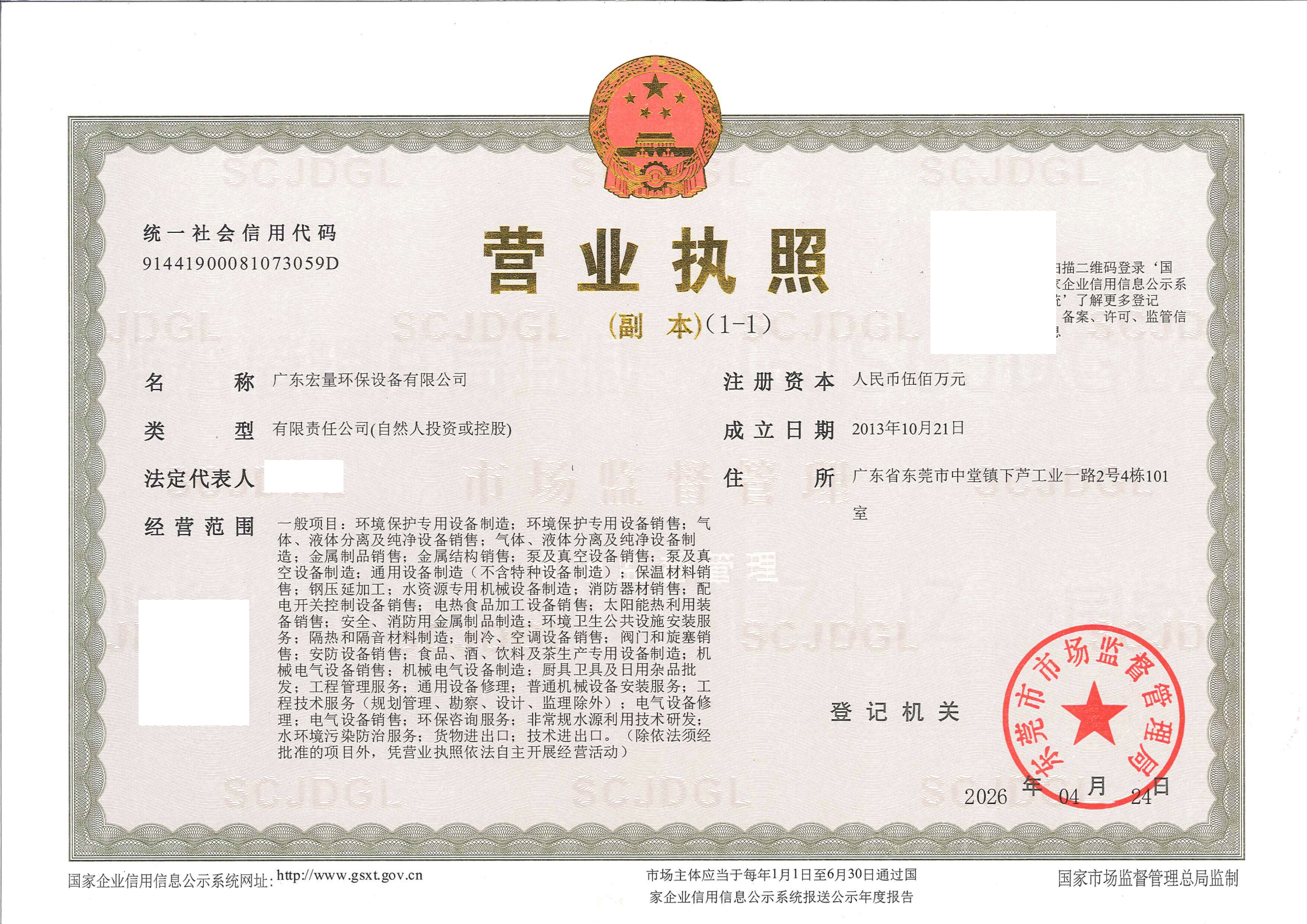
Business Licence — Redacted Copy
广东宏量环保设备有限公司. Copy stamped 24 Apr 2026; establishment recorded 21 Oct 2013. Personal name and scannable codes are masked. Registration context.
Document Scope
For a selected tank and intended use, request configuration-matched documentation. Printed dates do not establish current register status.
Project Specifications & Documentation
A clear project brief helps identify which drawings, material details and inspection records should be reviewed before an order.
- Intended water use and target storage capacity.
- Indoor, outdoor or underground location, available footprint and access.
- Site conditions, foundations, connections and any groundwater or cover-load considerations where relevant.
- Available drawings and the technical or inspection documents requested by the project.
Use the selection-based project brief to share what is known. Uncertain details can remain open for discussion.